In today’s digital-driven business environment, a website is no longer just an online presence. It functions as a communication hub, a data collection platform, a marketing engine, and often a transactional system. As websites grow more complex and interconnected, they also become prime targets for cyberattacks.
One of the most overlooked yet essential aspects of website security is regular system updates. Many organizations delay updates due to fear of downtime, limited technical resources, or the assumption that their website is “safe enough.” In reality, outdated systems are among the leading causes of website security breaches worldwide.
This article explains why system updates play a fundamental role in website security, what risks arise when updates are ignored, and how businesses can approach updates strategically to protect their digital assets.
The Role of Website Systems in Business Operations
A modern website consists of multiple layers of technology working together. These include content management systems (CMS), backend frameworks, frontend libraries, plugins, third-party integrations, and server environments. Each layer contributes to performance, usability, and security.
For businesses, websites often connect directly to:
- Customer databases and user accounts
- Contact forms and lead generation systems
- Payment gateways and transaction records
- Internal dashboards and admin panels
- APIs from external services
If even one component becomes vulnerable due to outdated software, attackers can exploit that weakness to compromise the entire system.
What Are Website System Updates?
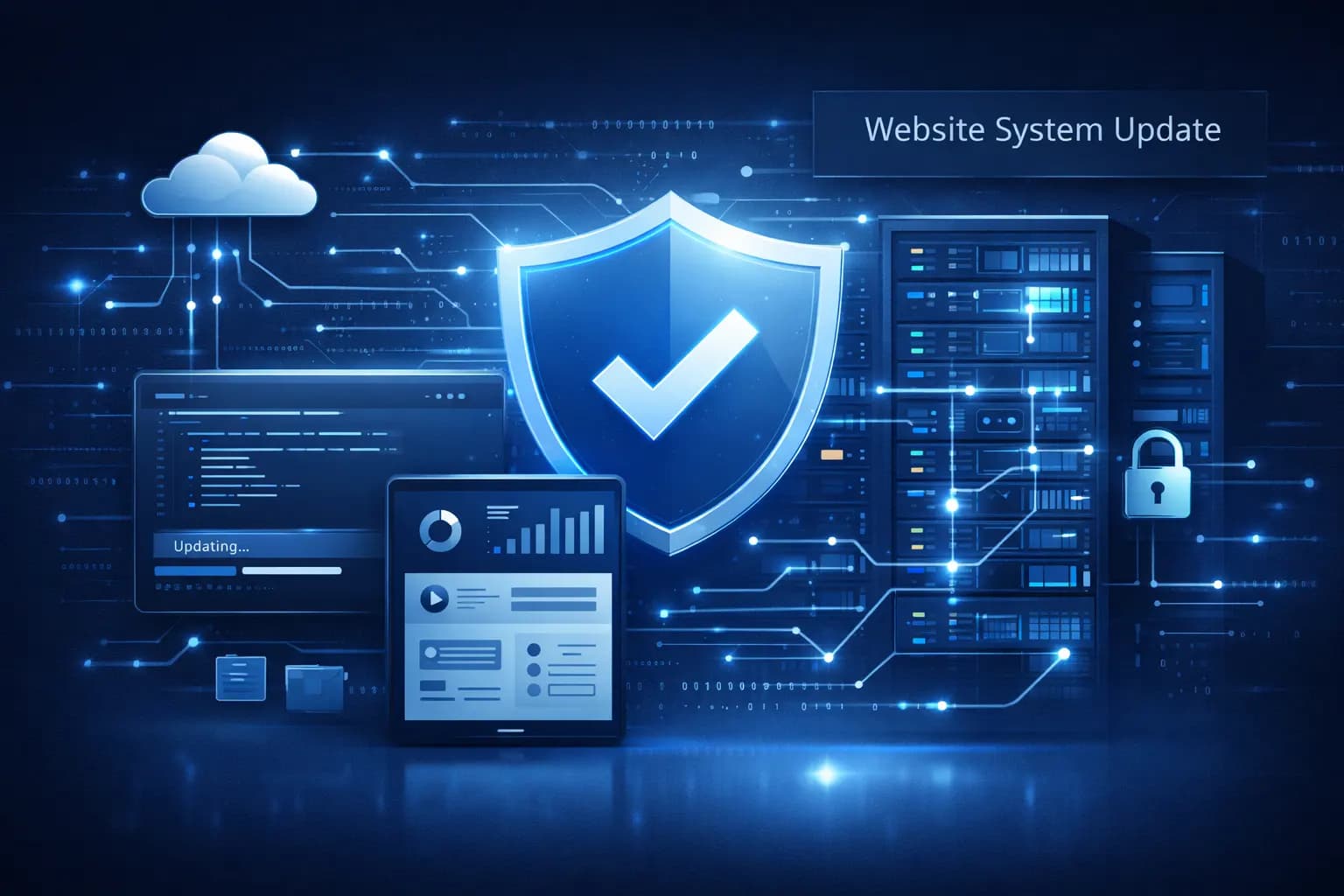
Website system updates refer to the process of upgrading software components to their latest versions. These updates are released by developers to address various issues, including:
- Security vulnerabilities and exploits
- Software bugs and stability problems
- Performance and speed improvements
- Compatibility with modern browsers and devices
- Compliance with updated security standards
Contrary to popular belief, updates are not just about adding new features. In many cases, updates are released specifically to close security gaps that have already been discovered in older versions.
Why Outdated Systems Are a Major Security Risk
1. Exploitation of Known Vulnerabilities
Cybercriminals actively monitor publicly disclosed vulnerabilities. Once a weakness is identified in a specific software version, attackers can automate scans to find websites that have not applied the latest updates.
An outdated system effectively broadcasts an open invitation to attackers who already know how to exploit it.
2. Malware Infections and Website Defacement
Websites that run on outdated software are far more likely to be infected with malware. These malicious scripts can redirect visitors, steal data, display spam content, or even take full control of the website.
In some cases, attackers deface websites by replacing content with unauthorized messages, which can severely damage a company’s brand image.
3. Data Breaches and Privacy Violations
Outdated systems often lack modern encryption and security controls. This makes sensitive data such as customer information, login credentials, and transaction records vulnerable to theft.
A single data breach can lead to legal consequences, financial losses, and long-term damage to customer trust.
4. Loss of User Trust and Credibility
Users expect websites to be secure, fast, and reliable. Frequent errors, security warnings, or suspicious behavior can quickly erode trust.
Once trust is lost, it is difficult and costly to rebuild.
How System Updates Support Modern Security Standards
Cybersecurity standards continue to evolve as threats become more sophisticated. Regular system updates help websites align with modern best practices, including:
- Stronger encryption protocols
- Improved authentication and access control
- Enhanced protection against brute-force attacks
- Better monitoring and logging capabilities
Without updates, a website gradually falls behind current security expectations, increasing both technical and reputational risk.
The Impact of System Updates on Performance and SEO
Website security and performance are closely connected. Many updates include performance optimizations that reduce load times, fix memory leaks, and improve overall stability.
From an SEO perspective, search engines favor websites that:
- Use secure connections (HTTPS)
- Load quickly on all devices
- Provide a stable and error-free experience
- Are free from malware and spam behavior
Neglecting updates can lead to technical SEO issues that negatively affect rankings and visibility.
Why Businesses Often Delay System Updates
Despite the clear benefits, many organizations still postpone updates. Common reasons include:
- Fear of website downtime
- Lack of internal technical expertise
- Concerns about compatibility issues
- Underestimating security risks
While these concerns are understandable, the risks of not updating often outweigh the temporary inconvenience of maintenance.
Effective Strategies for Website System Updates
To minimize risk and disruption, businesses should adopt a structured approach to updates:
- Conduct regular system audits
- Schedule routine maintenance windows
- Test updates in a staging environment
- Create backups before applying updates
- Monitor website behavior after updates
This proactive approach ensures stability while maintaining a strong security posture.
The Role of PT Code Hero Indonesia in Website Security
As a digital technology company, PT Code Hero Indonesia understands that website security requires continuous attention. A visually appealing website alone is not enough without a secure and well-maintained system behind it.
Through professional website development and maintenance services, Code Hero helps businesses keep their systems up to date, secure, and aligned with evolving digital standards.
Conclusion
System updates are not optional technical tasks; they are a core component of website security strategy. Regular updates protect against known vulnerabilities, improve performance, support SEO, and help maintain user trust.
For businesses that view their website as a valuable digital asset, consistent system updates are a long-term investment in security, credibility, and growth.
Want to ensure your business website remains secure and reliable?
Learn more about professional website development and maintenance solutions at Code Hero Indonesia .