Search behavior is changing as people use AI assistants to research products, compare services, and find trusted businesses. Brands now need to understand how ChatGPT, Gemini, Perplexity, and Google AI discover and present their information. Effective measurement starts with reliable data, clear metrics, and consistent analysis.
What Is Brand Visibility in AI Search?
Brand visibility in AI search describes how often and how effectively an AI-powered platform presents a business, product, or service in its answers. It includes brand mentions, website citations, product recommendations, and references to company information.
Traditional search engines usually present a list of web pages. Users review the results and choose which page to visit. AI search systems can provide a direct answer by summarizing information from multiple sources.
This change affects how businesses build their online presence. A company cannot rely only on its position in traditional search results. It also needs clear information, useful content, reliable sources, and a consistent digital identity.
Consider a user who asks ChatGPT, "Which SEO agencies are suitable for enterprise businesses?" The platform may provide a comparison based on available information from several websites and other sources.
A brand with useful service information, relevant industry content, and a credible online presence may have a better opportunity to appear in the answer. However, no company can guarantee permanent inclusion in an AI-generated recommendation.
Visibility also does not automatically create revenue. Businesses must examine whether AI mentions attract relevant visitors, build trust, and contribute to qualified leads or sales.
Three Important Dimensions
Brand visibility measures whether people encounter a business in AI answers. Brand authority describes its credibility and recognition. Business impact measures whether that visibility contributes to traffic, leads, and revenue.
Latest AI Search Developments and Their Impact on Brands
AI search has moved beyond experimental technology. Major technology companies continue to develop new search experiences, while marketing platforms are building tools to measure AI citations and brand presence.
1. Google expands its AI-powered search experience
On May 19, 2026, Google announced another major step in its AI Search development. The company reported that AI Mode had surpassed one billion monthly users.
This figure represents Google's own company-reported usage data. It should not be treated as an independently audited measurement of every AI search experience.
Google also introduced a more interactive search experience. Users can ask complex questions, provide different types of input, and continue conversations through AI Mode.
For businesses, this development creates a reason to review their content strategy. Potential customers may discover a brand through several connected questions instead of a single keyword search.
2. Google improves links in AI Overviews and AI Mode
On October 15, 2026, Google announced updates to AI Overviews and AI Mode. These updates included clearer inline links, more visible source information, timely news articles, and stronger links to related content.
Google explained that these changes help users explore original sources and find useful web pages more easily. The company also expanded the presentation of timely articles across additional locations and languages.
This development matters to publishers and businesses because source visibility remains an important part of AI-powered search. Companies should create pages that provide useful information and support specific claims with reliable evidence.
3. Research highlights the role of external sources
On March 31, 2026, Search Engine Land reported an analysis by Peec AI covering 30 million sources cited in AI-generated answers. The analysis included ChatGPT, Google AI Mode, Gemini, Perplexity, and AI Overviews.
Reddit ranked as the most-cited domain in the analysis. YouTube, LinkedIn, Wikipedia, and Forbes also appeared among the leading cited sources.
The findings suggest that brand visibility does not depend only on content published on a company's own website. External sources can also influence how AI systems present information about a business.
However, these findings reflect a particular dataset and research methodology. They do not establish a universal ranking of preferred sources for every industry or AI platform.
4. The AI visibility market moves toward business measurement
Another important industry development took place in November 2026. Bloomreach announced its acquisition of AthenaHQ on November 16. CMSWire reported the announcement on November 17.
AthenaHQ operates in the answer engine optimization market. Its technology focuses on AI citation analysis, content opportunities, and visibility measurement.
The acquisition signals growing interest in connecting AI visibility with commercial outcomes. Marketing teams increasingly need to understand not only where a brand appears, but also how that presence supports customer acquisition and revenue.
Step One: Collecting Data for AI Search Visibility
Reliable AI visibility measurement begins with structured data collection. Businesses need to identify the questions their audiences ask, the platforms they use, and the brands that appear in AI-generated answers.
The first step is to define a clear research scope. Do not start by counting random brand mentions. Instead, build a question set that reflects the business category, target audience, and customer journey.
Build a search question framework
Group questions according to search intent. This approach helps businesses understand where AI systems mention their brands and where competitors receive stronger visibility.
- Informational intent: Questions about a topic, problem, or general concept.
- Commercial intent: Questions about products, services, comparisons, and providers.
- Transactional intent: Questions that indicate a user may purchase or contact a provider.
- Branded intent: Questions that include a company or product name.
- Local intent: Questions about businesses, services, or providers in a specific location.
An SEO agency could use questions such as:
- What is search engine optimization?
- How can a business improve its organic search performance?
- Which SEO agencies serve enterprise companies?
- How can a brand appear in ChatGPT answers?
- What is the difference between SEO and Generative Engine Optimization?
- Which SEO services offer the best value for growing businesses?
Test multiple AI search platforms
Use the same question groups across ChatGPT, Gemini, Perplexity, and Google AI Overviews or AI Mode.
Each platform may produce different answers. Models, retrieval systems, user context, location, and source availability can affect the results.
Record the following information for every test:
- AI platform and model version, when available.
- Testing date and time.
- Language and location.
- Exact question or prompt.
- Brand mentions and recommendations.
- Competitor mentions.
- Website citations and source URLs.
- Sentiment and context.
- Relevant product or service information.
Preserve the complete response whenever possible. A simple note that a brand appeared does not provide enough context for meaningful analysis.
For example, an AI platform may mention a company as one of several providers. Another response may present the same company as the primary recommendation. These results should not receive identical scores.
Repeat tests over several days or weeks. This approach helps teams identify patterns instead of relying on one temporary response.
Step Two: Cleaning and Organizing AI Search Information
Raw AI search data often contains inconsistencies. One platform may use a full company name, while another uses a shortened name, product name, or domain.
Without a data-cleaning process, a measurement system may count the same brand as multiple entities or combine unrelated companies.
Normalize brand identities
Create a reference list containing the official company name, product names, common abbreviations, and verified website domains.
Use this reference list to identify brand mentions consistently. However, check the surrounding context before classifying a name as a valid mention.
Remove duplicate URLs and citations
Different URLs may point to the same underlying page. Tracking parameters, duplicate pages, and alternative URL formats can create misleading citation counts.
Use canonical URLs where appropriate. Group duplicate references and retain the original source information for verification.
Separate brand mentions from website citations
A brand mention and a website citation represent different forms of visibility.
An AI platform may mention a business without linking to its website. It may also cite a company page without directly naming the business in the main answer.
Track these situations separately. This distinction helps businesses understand whether AI systems recognize the brand, use its information, or both.
Classify sentiment and factual accuracy
Classify each relevant answer as positive, neutral, negative, or irrelevant. Then review whether the information matches the company's verified facts.
For example, an AI system may describe a company as an SEO provider but display an outdated address or incorrect service information. This result represents an accuracy problem, even if the company receives a brand mention.
Always preserve the original AI response. The raw record allows analysts to review context and correct classification errors later.
Step Three: Choosing the Right AI Visibility Metrics
Metrics turn collected information into measurable business insights. However, no single metric can describe the complete performance of a brand across AI search platforms.
A useful measurement framework should combine visibility, citation quality, brand reputation, competitive performance, and business outcomes.
1. Brand Mention Rate
Brand Mention Rate measures the percentage of tested AI answers that mention a specific brand.
Brand Mention Rate Formula:
(Answers containing the brand / Total tested answers) × 100%
For example, a company runs 100 relevant tests and finds 35 answers that mention its brand. Its Brand Mention Rate is 35%.
2. Citation Rate
Citation Rate measures how often an AI platform uses a company's website as a source in its answers.
This metric differs from brand mentions. A platform may mention a company without linking to its website. It may also use a company page without naming the company directly in its response.
3. Share of Voice
Share of Voice measures a brand's proportion of total brand mentions within a defined group of AI search responses.
If all analyzed brands receive 100 mentions and one company receives 25, that company has a 25% Share of Voice within the tested dataset.
The comparison must use consistent questions and sampling conditions. Comparing different question sets can create misleading results.
4. Citation Coverage
Citation Coverage measures how much of a company's priority question set produces citations from its website.
This metric helps teams identify whether their content supports several important topics or only a small group of questions.
5. Sentiment and Accuracy Score
A high mention rate does not always indicate strong brand performance. Teams should review the context and accuracy of every important mention.
Check descriptions of products, prices, locations, service features, and company expertise. Incorrect information can reduce customer trust and affect purchase decisions.
6. Referral Traffic and Conversion Rate
These metrics connect AI visibility with business performance. Use Google Analytics 4, CRM records, and conversion tracking to understand whether AI-referred visitors take valuable actions.
Relevant indicators include sessions, engaged sessions, contact form submissions, qualified leads, sales inquiries, and purchases.
Keep attribution limitations in mind. Some AI-driven visits may appear as direct traffic or under other traffic categories when referral information is unavailable.
| Metric | Measurement | Business Purpose |
|---|---|---|
| Mention Rate | Brand appearances | Awareness |
| Citation Rate | Website references | Authority |
| Share of Voice | Competitor comparison | Market position |
| Sentiment | Mention context | Reputation |
| Referral Traffic | Website visits | Acquisition |
| Conversion Rate | Completed actions | Revenue |
Step Four: Analyzing Patterns and Finding Opportunities
After collecting and cleaning the data, teams need to identify meaningful patterns. Counting mentions alone does not explain why a brand appears or why competitors receive stronger recommendations.
Compare performance across platforms
Compare ChatGPT, Gemini, Perplexity, and Google AI results. Review the frequency of brand mentions, website citations, source types, and competitor appearances.
A company may receive frequent citations in Perplexity but fewer mentions in ChatGPT. This difference may reflect platform-specific retrieval behavior or different source availability.
Do not assume that one platform always provides better business opportunities. Evaluate the relevance and quality of each appearance.
Analyze performance by search intent
Group responses according to the user's objective. A business may perform well for informational questions but remain invisible when users ask for product recommendations or service comparisons.
This pattern may indicate that the company publishes useful educational content but lacks clear commercial information. The website may need stronger service descriptions, case studies, pricing guidance, or comparison pages.
Identify competitor visibility gaps
Review the questions where competitors appear more often. Identify the sources that support their recommendations.
A competitor may receive stronger visibility because it publishes detailed case studies, receives relevant industry coverage, maintains accurate business information, or provides useful product documentation.
These findings help businesses prioritize their next actions. They can focus on missing information instead of producing more content without a clear purpose.
Identify influential citation sources
Group citations into categories such as company websites, news publications, industry websites, review platforms, directories, community forums, and social platforms.
This analysis helps teams identify where their brands need stronger and more credible representation. The goal is not to collect as many backlinks or mentions as possible. It is to develop a trustworthy presence across relevant information sources.
Step Five: Turning AI Search Insights into SEO Actions
Measurement creates value only when it informs decisions. Companies should translate visibility findings into clear content, technical, and reputation improvements.
1. Improve content quality and usefulness
Create content that answers real customer questions. Explain complex topics clearly, support important claims with reliable evidence, and include practical examples.
Avoid producing large volumes of articles that only change the target keyword. Search engines increasingly evaluate whether content provides meaningful value beyond information that already exists across the web.
Original research, first-hand experience, detailed case studies, and expert explanations can help a business build a stronger information resource.
2. Strengthen technical SEO
Make sure search engine crawlers can access important website pages. Review robots.txt, XML sitemaps, canonical tags, internal links, mobile usability, and page performance.
Use clear headings and organize content into logical sections. Write focused paragraphs and use tables or lists when they improve readability.
Implement structured data when it matches the page content and supported search features. Keep all structured information consistent with the visible information on the page.
Google states that AI Overviews and AI Mode do not require special AI markup. Pages still need to meet Google's standard technical requirements and provide useful content.
3. Build authority beyond your website
Develop a credible presence across relevant external sources. Companies can contribute expert insights, publish original research, participate in industry discussions, and build relationships with reputable publishers.
Maintain consistent company information. Business names, locations, service descriptions, and contact details should match official company records.
Avoid artificial mentions, fake reviews, and low-quality publication networks. These practices do not provide reliable evidence of brand authority and may damage business reputation.
4. Develop content around customer questions
Use unanswered or poorly covered questions as content opportunities. If customers frequently ask about pricing, implementation, technical requirements, or service comparisons, create pages that explain these subjects.
Provide enough detail to help readers make informed decisions. Explain processes, requirements, limitations, and expected outcomes without making unsupported promises.
5. Strengthen product and business information
Keep product information, service pages, business profiles, and contact details accurate. Where relevant, maintain up-to-date product feeds and business information through supported platform tools.
Consistent information helps customers understand what a company offers. It also supports better information discovery across search systems and digital platforms.
Step Six: Monitoring and Evaluating AI Search Performance
AI search visibility requires ongoing monitoring. A single test cannot describe long-term brand performance because AI answers can change with model updates, new information sources, query context, and time.
Businesses can build a monitoring dashboard with spreadsheets, Looker Studio, or specialized AI search analytics platforms.
Build a practical AI visibility dashboard
A useful dashboard should include:
- Total number of tested questions.
- Brand Mention Rate by AI platform.
- Citation Rate and Citation Coverage.
- Share of Voice against competitors.
- Most frequently cited domains and pages.
- Sentiment and information accuracy.
- AI referral traffic and engagement.
- Lead generation and conversion performance.
- Content and technical issues that require action.
Use Google Search Console and Google Analytics
On June 3, 2026, Google announced new generative AI performance reports in Search Console. The reports provide information about impressions, pages, countries, devices, and performance over time for selected generative AI features in Search and Discover.
Google initially rolled out these reports to a subset of websites for testing. Therefore, website owners should check whether the feature is available for their properties.
Google Analytics 4 provides additional information about user behavior after visitors reach a website. Teams can review sessions, engagement, lead submissions, and conversion events.
Connect analytics data with CRM records when possible. This approach helps businesses understand whether AI visibility contributes to qualified leads and actual sales.
Apply a 30, 60, and 90-day evaluation cycle
During the first 30 days, establish a baseline. Collect AI search responses, review competitors, audit technical SEO, and identify priority questions.
During the next 30 days, improve content, strengthen service pages, review internal links, and address important information gaps.
During the final 30 days, repeat the original tests. Compare the results with the baseline and identify which actions created measurable improvements.
Evaluate more than mention growth. Check citation quality, sentiment, information accuracy, website traffic, qualified leads, and business outcomes.
This process creates a practical feedback loop. Businesses can use the findings to update priorities and improve their next optimization cycle.
Common Mistakes in AI Search Visibility Measurement
Many businesses are exploring Generative Engine Optimization and Answer Engine Optimization. However, poor measurement methods can create misleading reports and unnecessary marketing costs.
Treating one AI answer as a permanent result
AI-generated responses can change. Teams should repeat tests and maintain consistent sampling conditions before making strategic decisions.
Focusing only on brand mentions
A brand mention does not always indicate positive visibility. Negative statements, incorrect facts, or irrelevant recommendations may create reputational problems.
Ignoring traditional SEO
AI search does not remove the need for technical SEO, content quality, crawling, and indexing. Google's own guidance confirms that its AI search features rely on foundational search systems.
Following unverified GEO techniques
Not every popular AI optimization recommendation has official support. Google explains that websites do not need special AI files such as llms.txt or special structured data just to appear in its generative search features.
Businesses should prioritize strategies that improve user experience, information quality, and search accessibility. Avoid expensive tactics that promise guaranteed AI mentions without a transparent measurement method.
Building Stronger AI Search Visibility with PT Code Hero Indonesia
The growth of AI-powered search creates new challenges for businesses that want to maintain a strong digital presence. Companies need websites that provide useful information, support reliable indexing, and communicate their services clearly.
PT Code Hero Indonesia recognizes that sustainable search performance requires more than keyword placement. Businesses need a structured SEO strategy that combines technical quality, relevant content, competitive analysis, and consistent brand information.
Professional SEO services can help businesses identify website issues, evaluate content quality, understand search competition, and prioritize improvements based on available data.
Companies that want to improve organic search performance should start by reviewing their current website condition. This evaluation provides a practical foundation for future SEO and AI search initiatives.
Prepare Your Website for the Future of AI Search
Explore professional SEO solutions that help improve website quality, strengthen organic visibility, and build a more reliable digital foundation.
Explore Professional SEO ServicesFrequently Asked Questions About Brand Visibility in AI Search
1. What does Brand Visibility in AI Search mean?
Brand Visibility in AI Search measures how often AI-powered platforms mention, recommend, or cite a company's information. Relevant platforms include ChatGPT, Gemini, Perplexity, and Google AI Overviews.
2. How can a brand appear in ChatGPT answers?
Businesses should maintain accessible websites, publish useful and accurate information, build credible external references, and maintain consistent brand details. No SEO strategy can guarantee that ChatGPT will always mention a particular company.
3. What is the difference between SEO, GEO, and AEO?
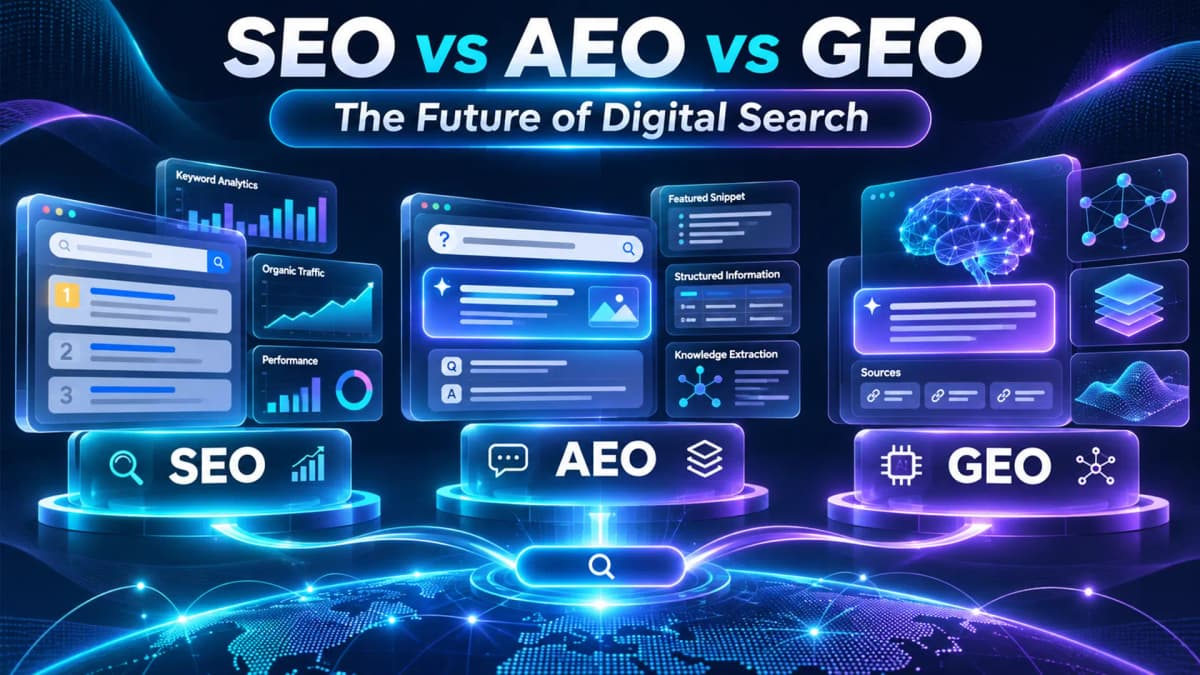
SEO improves website visibility across search engines. GEO focuses on visibility in generative AI experiences. AEO focuses on making information useful for systems that provide direct answers. These approaches overlap and share several foundational optimization practices.
4. Which metrics should businesses track?
Important metrics include Brand Mention Rate, Citation Rate, Share of Voice, Citation Coverage, sentiment, information accuracy, referral traffic, and conversion rate. Businesses should select metrics based on their goals.
5. Is traditional SEO still important for AI search?
Yes. Google confirms that its AI search features continue to rely on foundational SEO practices. Website accessibility, indexing, useful content, and technical quality remain important.
6. How long does it take to improve AI search visibility?
There is no universal timeline. Results depend on website quality, competition, brand reputation, content relevance, and platform behavior. Businesses should establish a baseline and evaluate progress through regular testing.
7. Do businesses need specialized AI SEO tools?
Specialized tools can help monitor brand mentions, citations, competitors, and changes in AI responses. However, reliable measurement still requires consistent sampling, accurate data classification, and human review.