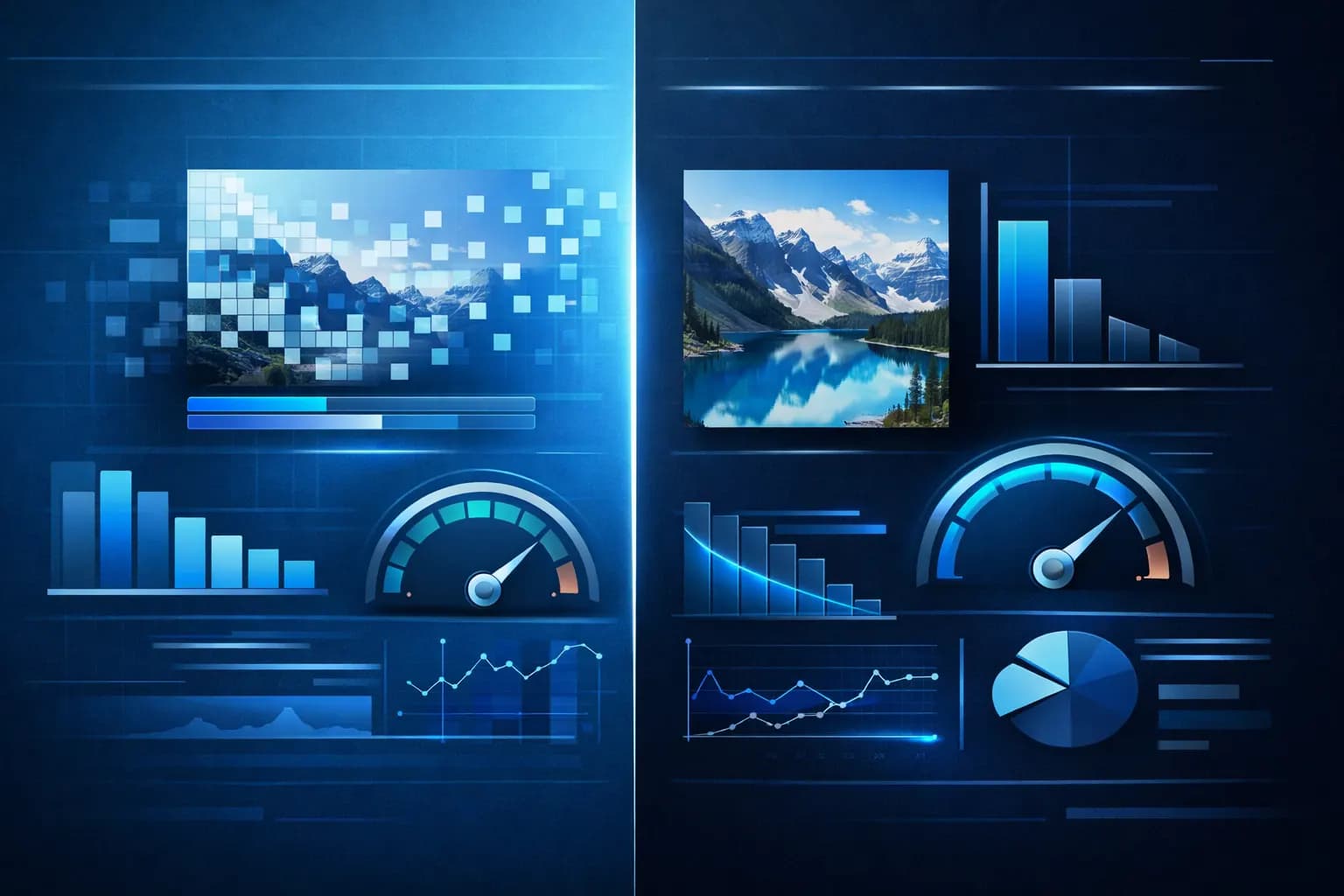
A comprehensive comparison of next-generation image formats for speed, SEO performance, and modern web standards.
Why Image Formats Matter More Than Ever in 2026
Website performance is no longer a technical luxury—it is a business requirement. In 2026, images continue to account for the largest portion of total page weight, often exceeding 60% of all transferred data.
Search engines like Google prioritize fast-loading websites that provide a smooth, stable, and visually pleasing experience. Image formats directly influence Core Web Vitals, especially Largest Contentful Paint (LCP) and Cumulative Layout Shift (CLS).
This is where modern image formats—WebP and AVIF— have become essential tools for developers, businesses, and SEO professionals.
What Is WebP?
WebP is a modern image format developed by Google to replace legacy formats such as JPEG, PNG, and GIF for web usage. It uses advanced compression techniques to reduce file size while maintaining acceptable image quality.
Since its introduction, WebP has gained widespread adoption across CMS platforms, CDNs, and image optimization tools.
Key Advantages of WebP
- Smaller file sizes compared to JPEG and PNG
- Support for transparency (alpha channel)
- Animation support as a GIF alternative
- Near-universal browser compatibility
- Fast encoding and decoding
Limitations of WebP
- Compression efficiency lower than AVIF
- Reduced quality at extremely low bitrates
- Limited HDR and color depth support
What Is AVIF?
AVIF (AV1 Image File Format) is a next-generation image format built on the AV1 video codec. It represents a major leap forward in compression efficiency and image quality.
AVIF is designed for performance-first environments where bandwidth efficiency, visual fidelity, and SEO impact are critical.
Key Advantages of AVIF
- Up to 50% smaller file sizes than WebP
- Superior image quality at low bitrates
- Support for HDR and wide color gamut
- Excellent Core Web Vitals performance
- Future-proof format for modern browsers
Limitations of AVIF
- Slower encoding process
- Limited support in older design tools
- Fallback images still required
WebP vs AVIF: Performance Comparison
| Aspect | WebP | AVIF |
|---|---|---|
| File Size | Small | Very Small |
| Image Quality | Good | Excellent |
| Loading Speed | Fast | Extremely Fast |
| SEO Impact | High | Very High |
| Browser Support | Almost Universal | Modern Browsers |
Impact on SEO and Core Web Vitals
Image optimization plays a crucial role in improving LCP, reducing page weight, and enhancing mobile performance. AVIF consistently outperforms WebP in lab tests when properly implemented.
However, the most effective strategy is not choosing one format exclusively, but combining both for maximum compatibility and performance.
Best Image Strategy for 2026 Websites
- Use AVIF as the primary image format
- Provide WebP as a fallback
- Retain JPEG/PNG only when necessary
- Implement responsive images and lazy loading
This strategy is widely adopted by the development team at PT Code Hero Indonesia when building performance-oriented websites.
Building Performance-Driven Websites
At PT Code Hero Indonesia, modern image optimization is a core part of our website development process—ensuring speed, SEO readiness, and scalability.
Learn more about our approach here: Website Development Services
This article is part of Code Hero Indonesia’s educational content series on modern web performance and SEO optimization.