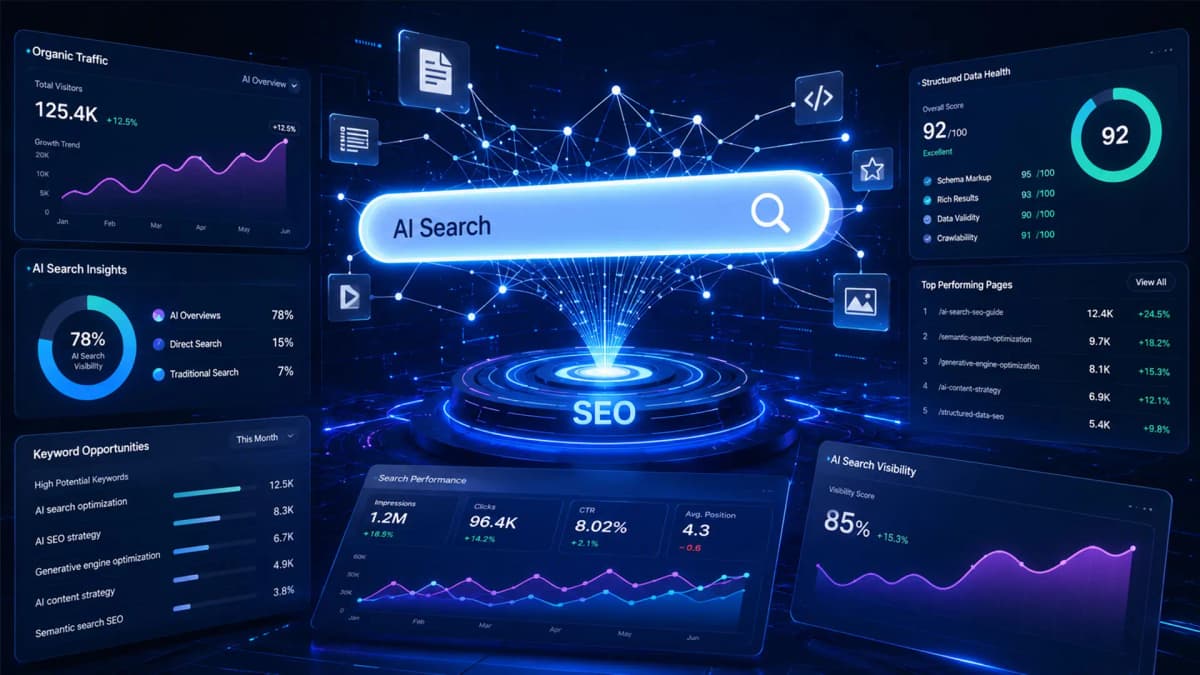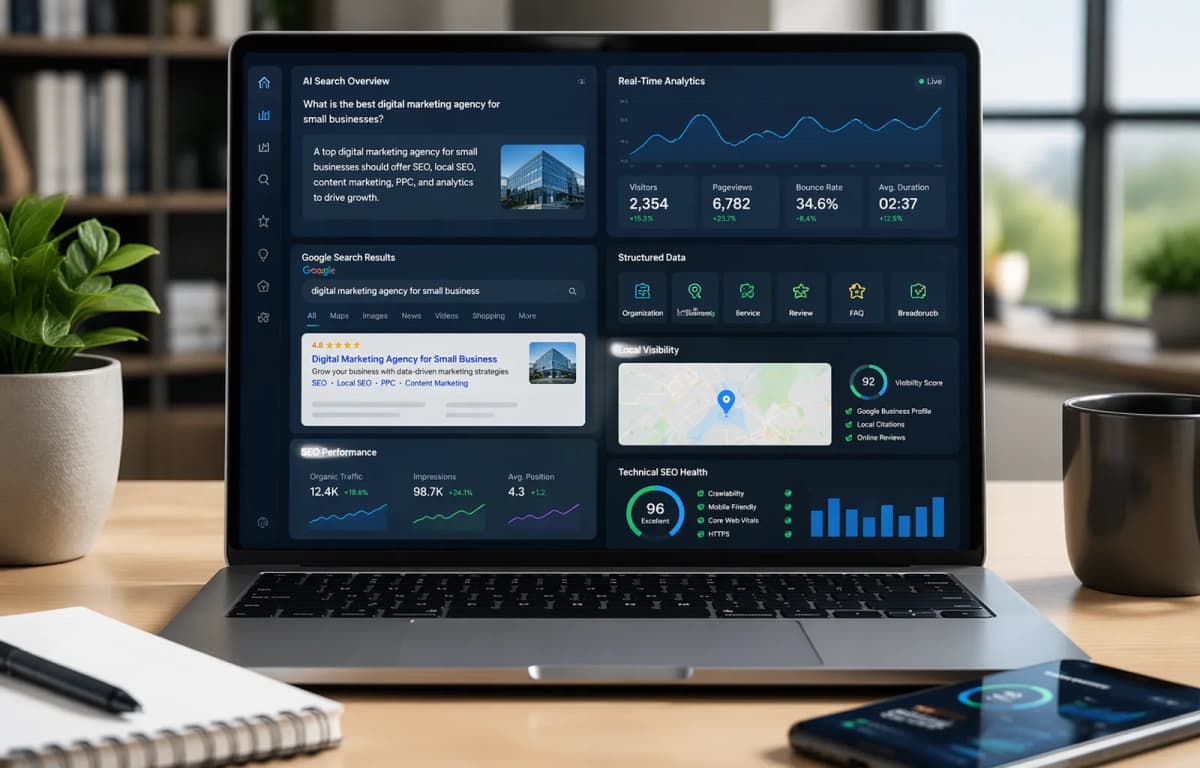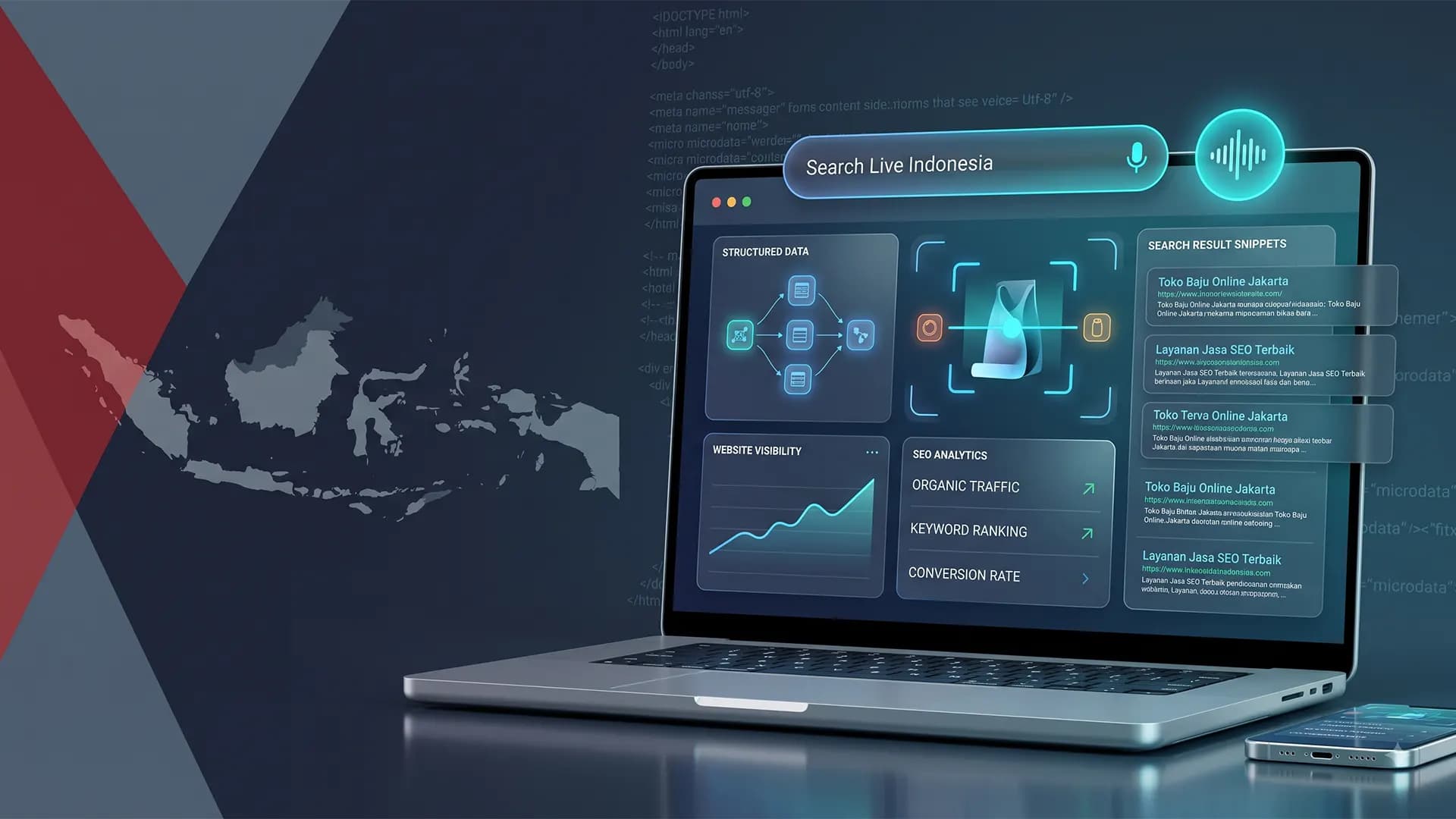
Cara orang mencari informasi sedang berubah. Pengguna tidak lagi selalu mengetik beberapa kata kunci di kolom pencarian. Mereka bisa berbicara langsung, mengajukan pertanyaan lanjutan, atau menggunakan kamera untuk memberikan konteks visual. Perubahan ini semakin relevan setelah Google menghadirkan Search Live di Indonesia.
What Is Search Live and Why Does It Matter for Businesses?
Search Live is part of Google's AI Mode experience and allows users to have real-time, back-and-forth conversations with Search using their voice. Users can also activate their camera and show Search what they are looking at, providing visual context for their questions.
This changes the search journey. A potential customer may no longer search only for a short phrase such as “website developer Indonesia.” Instead, they may ask a much more specific question, such as: “Which company can build a fast business website in Indonesia that already includes SEO and is easy for my marketing team to manage?”
Camera-based search creates another layer of context. A user can show a product, device, location, plant, component, interface, or other physical object and ask questions about what they see. Search can then provide an AI-powered response alongside relevant links from the web.
For businesses, the implication is clear: your website needs to communicate who you are, what you provide, who your services are designed for, where you operate, and why people should trust the information you publish.
Do Business Websites Need Special “Search Live SEO”?
There is no secret Search Live markup or special AI schema that automatically makes a page appear in AI Mode. The fundamentals remain familiar: Google must be able to crawl and index the page, users should receive genuinely useful information, important content should be available in readable text, internal links should connect related pages, and the overall page experience should be strong.
Structured data can still help search systems understand entities and page content, but it needs to accurately represent information that is actually visible on the page. Adding unnecessary schema solely because it sounds “AI friendly” is not a sustainable strategy.
Preparing for AI Search therefore does not mean abandoning traditional SEO. Businesses should strengthen the same foundations that already support organic visibility: technical SEO, high-quality content, useful visual assets, clear business information, and a website architecture that makes important pages easy to discover.
How Search Live Changes Search Behavior
1. Keywords become conversations
Voice-based experiences encourage users to speak in complete sentences. They do not need to translate their needs into traditional SEO keywords before searching. They can simply describe what they want.
As a result, business websites should not focus exclusively on short search phrases. Pages should answer the real questions prospects ask while researching a problem, comparing providers, evaluating solutions, and deciding whether to contact a company.
2. One search can develop into multiple questions
Conversational search makes follow-up questions easier. A user can move naturally from “What solution do I need?” to “How much does it cost?”, “What is the difference between these options?”, “Which one fits my company?”, and finally “Who can provide this in Indonesia?”
A thin service page with a short generic description provides less useful context than a comprehensive page that explains the service, problems solved, process, benefits, limitations, examples, common questions, and next steps.
3. Camera input creates new visual context
Visual search means images should be treated as useful information rather than decoration. Product photos, screenshots, diagrams, interface previews, case-study images, before-and-after examples, and other visual assets can strengthen the meaning and usefulness of a page.
This is especially relevant for e-commerce, property, hospitality, automotive, manufacturing, food, healthcare, technical services, software, and any industry where users benefit from seeing a product or result before making a decision.
8 Website Strategies for Search Live and AI Search
1. Make Sure Important Pages Can Be Crawled and Indexed
An AI Search strategy cannot compensate for fundamental technical problems. If key pages are blocked, return errors, use incorrect canonical tags, or cannot be indexed, their visibility will remain limited.
Review robots.txt, XML sitemaps, canonical URLs, internal links, indexing status, rendering, and server responses. Google Search Console should remain part of your regular SEO workflow.
Code Hero's guide to Google Search Console URL Inspection provides additional guidance for diagnosing crawling and indexing issues.
2. Build Content Around Real Customer Questions
Use the language your customers actually use. If prospects repeatedly ask how long a project takes, whether integrations are available, how pricing works, or whether SEO is included, provide clear answers on the relevant service pages.
Question-based headings can make information easier to find, but avoid creating dozens of artificial FAQ sections purely to insert keywords. Focus on questions that genuinely influence customer decisions.
3. Give the Direct Answer Before the Long Explanation
For important questions, start with a concise answer and then provide context, examples, requirements, and limitations. This makes pages easier for visitors to scan and creates a clearer information hierarchy.
A website development page, for example, should quickly explain what types of sites are built, who the service is for, its major benefits, the development process, and how a prospect can start a consultation.
4. Strengthen Entity and Trust Signals
Search systems need to understand relationships between your brand, services, locations, expertise, authors, and topics. Do not hide important information behind vague marketing language.
Provide a clear company profile, specific service pages, genuine contact details, geographic information when relevant, portfolios, case studies, company policies, author or publisher information, and evidence of real-world experience.
5. Use Relevant Structured Data
Structured data provides machine-readable context for information already present on a page. Depending on the website, relevant types may include Organization, LocalBusiness, Service, Product, Article, BreadcrumbList, and other schema types that accurately describe the content.
The key principle is accuracy. Do not create ratings, reviews, pricing, availability, or other information in structured data that users cannot see or that the business cannot substantiate.
6. Optimize Images for Visual Search
Use sharp, relevant images that genuinely help users understand a product, service, process, or result. Give images descriptive filenames and alt attributes, compress them appropriately, and surround important visuals with contextual text.
Product businesses should consider multiple useful angles and consistent product information. Service companies can use portfolios, process diagrams, dashboards, user interface screenshots, project images, and other original visuals that provide additional context.
7. Build Strong Internal Linking
Internal links help visitors continue their research and make relationships between topics easier to understand. A Search Live article can naturally connect to technical SEO, content strategy, website development, performance, and SEO service pages.
For a broader content framework, see Code Hero's SEO Content Marketing Strategy 2026 .
8. Prioritize Mobile Performance and Conversion
Search Live is designed around mobile experiences. If a visitor follows a search result and reaches a slow, confusing, or intrusive website, the opportunity may be lost even if the page had strong search visibility.
Focus on responsive design, readable typography, simple navigation, HTTPS, efficient page performance, and clear conversion paths. SEO should not stop at impressions. The website must turn relevant traffic into inquiries, bookings, demo requests, registrations, or sales.
Search Live Optimization Examples by Business Type
Professional services
Clearly describe each service, who it is for, the problems it solves, how the engagement works, expected project stages, service areas, and how a prospect can start. Relevant portfolios and case studies can help visitors evaluate credibility.
E-commerce and product websites
Provide accurate product names, variants, dimensions, materials, specifications, use cases, availability, original images, and common purchasing information. A useful product page should offer more value than a generic supplier description.
Local businesses
Keep your business name, category, location, contact information, opening hours, service area, and Google Business Profile accurate. Create genuinely useful location content rather than duplicating the same page and changing only the city name.
Software and technology companies
Explain use cases, intended users, key features, integrations, workflow, security, dashboards, screenshots, and the business outcome the software supports. Buyers need to understand how a solution works, not merely which programming languages were used.
What Type of Content Is Better Prepared for AI Search?
Content that performs well in an AI-driven environment is still content created primarily to help people. Strong pages provide something beyond commodity information: first-hand experience, original examples, case studies, expert observations, useful comparisons, local context, proprietary insights that can be shared publicly, or explanations that simplify complicated decisions.
Publishing hundreds of thin pages with slightly different keywords is not the same as building topical authority. A smaller collection of comprehensive, interconnected, regularly maintained pages can create a much stronger experience for customers.
Businesses should therefore treat content as part of a knowledge system. Service pages, guides, case studies, product information, industry pages, and company information should reinforce each other rather than exist as isolated SEO assets.
How Can Businesses Measure AI Search Visibility?
Google Search Console and analytics remain essential. Track impressions, clicks, landing-page performance, engagement, conversions, and changes in organic visibility over time.
In June 2026, Google also began rolling out a dedicated Generative AI Performance report in Search Console to a subset of website owners. The report provides visibility data for generative AI experiences such as AI Overviews and AI Mode and can show information by page, country, device, and date.
Because access is being introduced gradually, the report may not yet appear for every Search Console property. When available, it can help identify which pages are beginning to earn impressions within generative AI search experiences.
Visibility alone should not become the final KPI. Connect organic performance with qualified leads, contact submissions, WhatsApp conversations, calls, demo requests, purchases, or whatever action generates measurable value for your business.
Common Search Live SEO Mistakes to Avoid
First, avoid treating Search Live as an entirely separate SEO discipline. Second, do not implement structured data that does not match the visible page. Third, avoid publishing large quantities of AI-generated content without editorial review, original insight, or a clear reason for the page to exist.
Voice search optimization should not result in awkward writing filled with unnatural long-tail phrases. Write in the language customers naturally use while maintaining a professional and well-organized content structure.
Most importantly, do not optimize only for the possibility of being referenced by an AI response. The real business goal remains the same: help potential customers discover your company, trust your expertise, understand your offer, and take action.
A Practical Priority Checklist for Business Websites
Start with the pages that have the greatest impact on revenue: your homepage, primary service pages, product pages, important location pages, company profile, and articles that already receive traffic or address high-value commercial topics.
Review whether each page has a clear search intent, relevant headline, useful customer answers, internal links, high-quality visuals, accurate metadata, a correct canonical URL, appropriate structured data, strong mobile usability, and a visible call to action.
Once the foundation is healthy, build content clusters around real customer problems. This allows your website to support multiple stages of the research journey instead of depending on a single keyword or landing page.
Search Live Is Not the End of SEO—It Is an Evolution of Search
Search Live demonstrates how search is becoming more conversational, multimodal, and contextual. Users can talk, show Search something through their camera, and continue asking questions without restarting the entire search process.
Business websites that want to remain competitive should respond by strengthening the fundamentals: healthy technical SEO, complete business information, useful content, relevant structured data, informative visuals, internal linking, and fast mobile experiences.
The goal is not to chase every new algorithm or feature. A more sustainable strategy is to build a website that can be discovered, understood, trusted, and used by prospective customers more effectively than competing alternatives.
Prepare Your Business Website for the AI Search Era
PT Code Hero Indonesia helps businesses build and optimize modern websites with a focus on performance, SEO architecture, user experience, content structure, scalability, and measurable business outcomes.
If your current website is slow, difficult to index, unclear to visitors, or missing a strong SEO foundation, Search Live and other AI-powered search experiences are another reason to improve the underlying digital asset rather than rely on short-term optimization tricks.
Explore Code Hero's professional website development services or review our business website SEO strategy to build a stronger foundation for modern search.