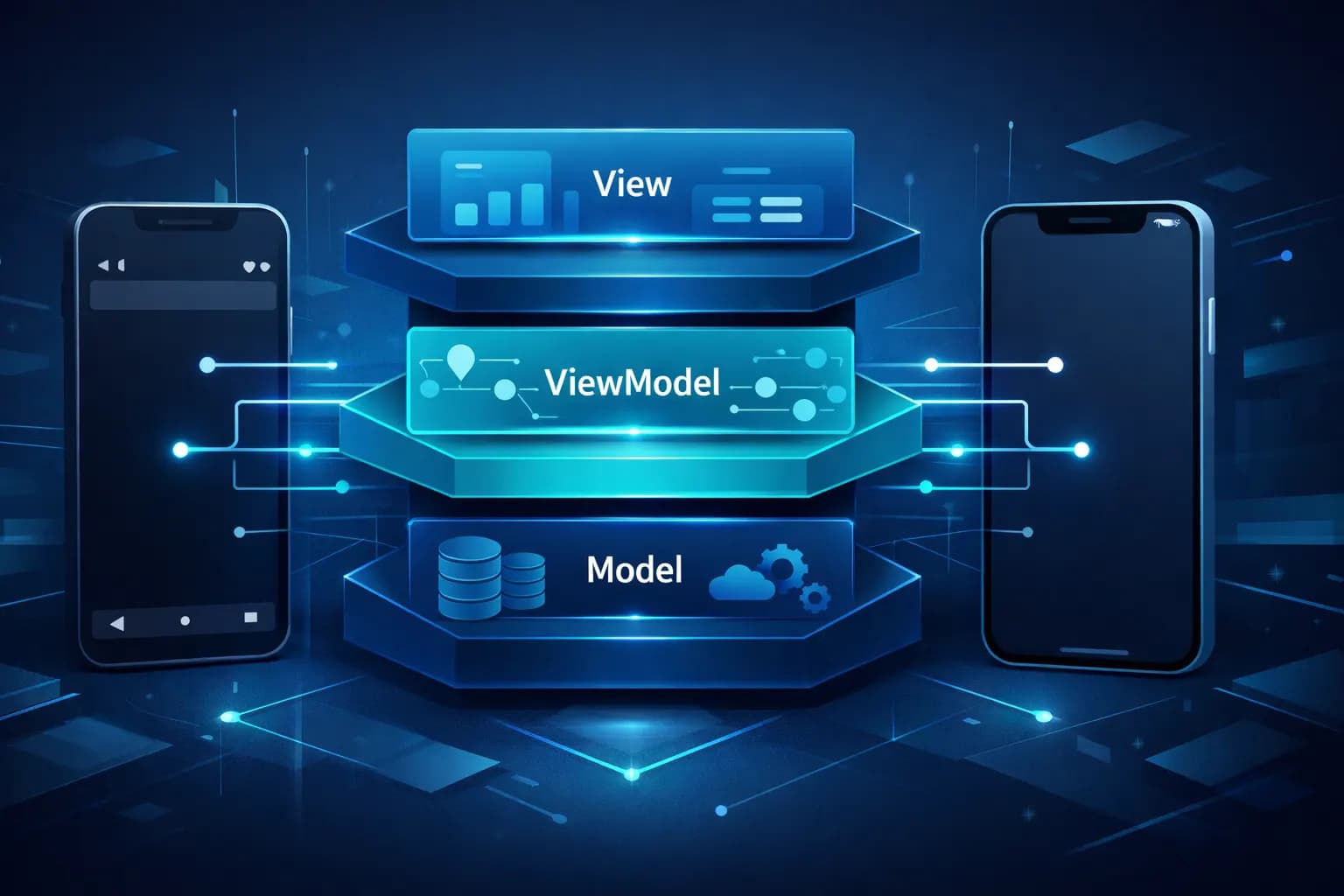
Modern mobile applications demand more than just attractive UI. They require a robust, maintainable, and scalable architecture. This is where MVVM Architecture becomes a crucial foundation for Android and iOS development.
At Code Hero Indonesia, MVVM is a core architectural approach used to deliver enterprise-grade mobile applications.
What Is MVVM Architecture?
MVVM (Model–View–ViewModel) is a design pattern that separates user interface logic from business logic, enabling clean code and easier long-term maintenance.
- Model: Data layer and business rules
- View: UI components
- ViewModel: Presentation logic and state management
Why MVVM Is Ideal for Mobile Apps
MVVM aligns perfectly with modern mobile frameworks such as Android Jetpack and SwiftUI.
- Improved code readability
- Better testability
- Scalable architecture
- Faster feature iteration
MVVM in Android Development
Android developers typically combine MVVM with:
- Kotlin
- ViewModel & LiveData
- StateFlow
- Repository pattern
MVVM in iOS Development
On iOS, MVVM works seamlessly with:
- SwiftUI
- Combine framework
- ObservableObject
MVVM vs Other Architectures
Compared to MVC or MVP, MVVM provides superior separation of concerns and scalability.
Clean Code Best Practices with MVVM
- Single Responsibility Principle
- Dependency Injection
- Modular structure
- Immutable state management
When Should You Use MVVM?
- Long-term mobile products
- Enterprise applications
- API-driven platforms
Professional Mobile Development Services
If you are planning to build a scalable Android or iOS application using modern architecture, Code Hero Indonesia provides end-to-end mobile app development services.