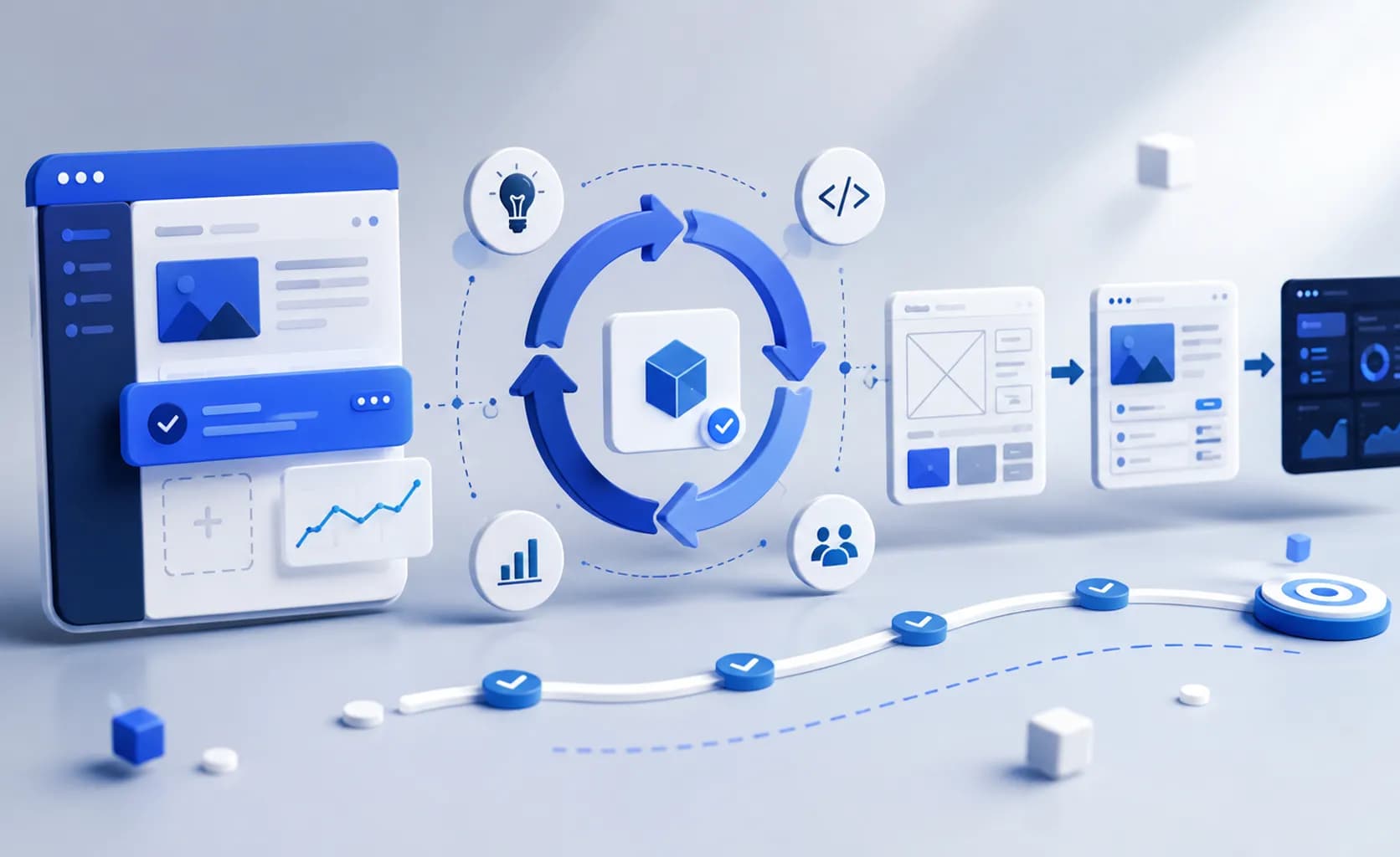
In today’s highly competitive digital landscape, businesses are increasingly investing in applications to streamline operations, enhance customer experience, and unlock new revenue streams. However, many application projects fail due to poor initial planning. This is where the concept of a Minimum Viable Product (MVP) becomes essential.
An MVP is not an unfinished product. Instead, it is a strategic approach that helps businesses validate ideas early, reduce risks, and make data-driven decisions throughout the development lifecycle.
Understanding Minimum Viable Product (MVP)
A Minimum Viable Product is the simplest version of a digital product that includes only the core features necessary to solve a primary user problem. The main goal of an MVP is learning — understanding how users interact with the product and whether it delivers real value.
In business application development, MVPs are commonly used to test workflows, system efficiency, and user adoption before committing to full-scale development.
Key Characteristics of an MVP
- Core functionality focused on real user needs
- Simple yet usable interface
- Scalable technical foundation
- Fast development cycle
Why MVP Matters in Business App Development
Building a fully-featured application without market validation often leads to wasted resources. MVP allows companies to test assumptions early and adjust strategies accordingly.
1. Early Product Validation
An MVP provides real user feedback at an early stage, enabling businesses to validate whether the solution addresses actual pain points.
2. Reduced Development Risk
By focusing on essential features first, businesses minimize financial risk and avoid unnecessary complexity.
3. Faster Time to Market
Launching an MVP allows companies to enter the market quickly, gain traction, and iterate based on real usage data.
Early Validation as a Strategic Advantage
Early validation is the backbone of the MVP approach. It helps organizations understand user behavior, identify improvement areas, and prioritize features that truly matter.
Common MVP Validation Methods
- Beta testing with early adopters
- Usage analytics and performance metrics
- User interviews and feedback surveys
- Feature experimentation and iteration
Avoiding Feature Overdevelopment
One of the biggest risks in software projects is overdevelopment — building too many features that users do not need. MVP helps teams stay focused on value-driven development.
- Feature prioritization based on real data
- Iterative development cycles
- Continuous user feedback integration
MVP as a Foundation for Scalable Digital Products
Successful MVPs serve as a strong foundation for scalable business applications. Once validated, the product can evolve with confidence and strategic clarity.
Choosing the Right Technology Partner
Developing an effective MVP requires both technical expertise and business understanding. An experienced technology partner can help transform ideas into validated digital solutions.
PT Code Hero Indonesia focuses on building MVP-based applications that support long-term growth and adaptability.
Conclusion
Minimum Viable Product is a strategic approach that enables businesses to build smarter, reduce risk, and align product development with real market needs.
Planning to Build a Business MVP?
A well-executed MVP can accelerate your digital transformation journey. Learn more about professional application development services.
Explore Application Development Services →