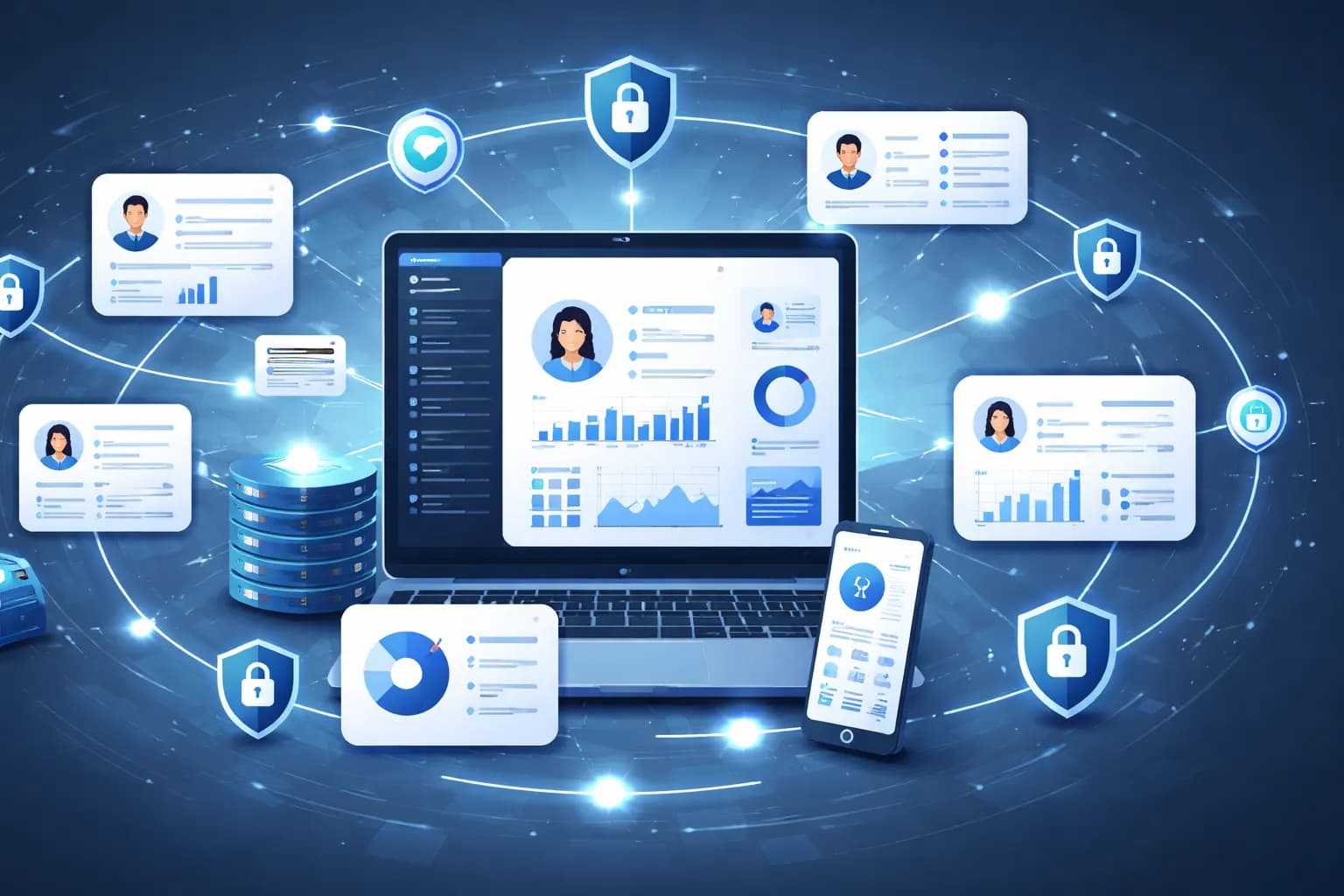
In today’s digital economy, digital customer data management has become a critical foundation for sustainable business growth. Customer data is no longer just a list of contacts—it is a strategic asset that helps companies understand customer behavior, improve services, and build long-term loyalty.
Businesses that still rely on manual or fragmented systems often face data inconsistency, security risks, and operational inefficiencies. This is why adopting a centralized digital system is essential.
What Is Digital Customer Data Management?
Digital customer data management refers to the process of collecting, storing, managing, and analyzing customer information using technology-based systems.
These systems provide a centralized database that enables real-time access, updates, and analysis across departments.
Types of Customer Data Managed Digitally
- Customer identity and contact information
- Transaction and purchase history
- Service interactions and support records
- Customer preferences and behavior patterns
- Loyalty and membership data
Challenges of Manual Customer Data Management
Manual data handling may seem cost-effective at first, but it often leads to serious long-term challenges.
- Data duplication and inconsistency
- Limited data security and access control
- Time-consuming data processing
- Difficulty in generating insights
- Higher risk of data loss
Benefits of Digital Customer Data Management
1. Centralized and Structured Data
All customer information is stored in a single, well-organized system that improves accessibility and accuracy.
2. Improved Data Security
Digital systems support encryption, access control, and automated backups to protect sensitive customer data.
3. Better Customer Insights
Well-managed data allows businesses to analyze customer behavior and make informed strategic decisions.
4. Enhanced Customer Experience
Personalized services and targeted communication become possible when customer data is properly managed.
The Importance of Custom Software Solutions
Every business has unique workflows and objectives. Custom-developed customer data management software ensures the system fits the organization’s specific needs.
Custom solutions also allow seamless integration, scalability, and long-term adaptability.
Supporting Digital Transformation with PT Code Hero Indonesia
PT Code Hero Indonesia specializes in developing custom software solutions that help businesses manage customer data securely, efficiently, and strategically.
Each solution is designed based on business processes, user needs, and future growth plans.
Looking for a Scalable Customer Data Management System?
Discover how custom software solutions can help your business manage customer data professionally and effectively.
Explore Custom Software Services