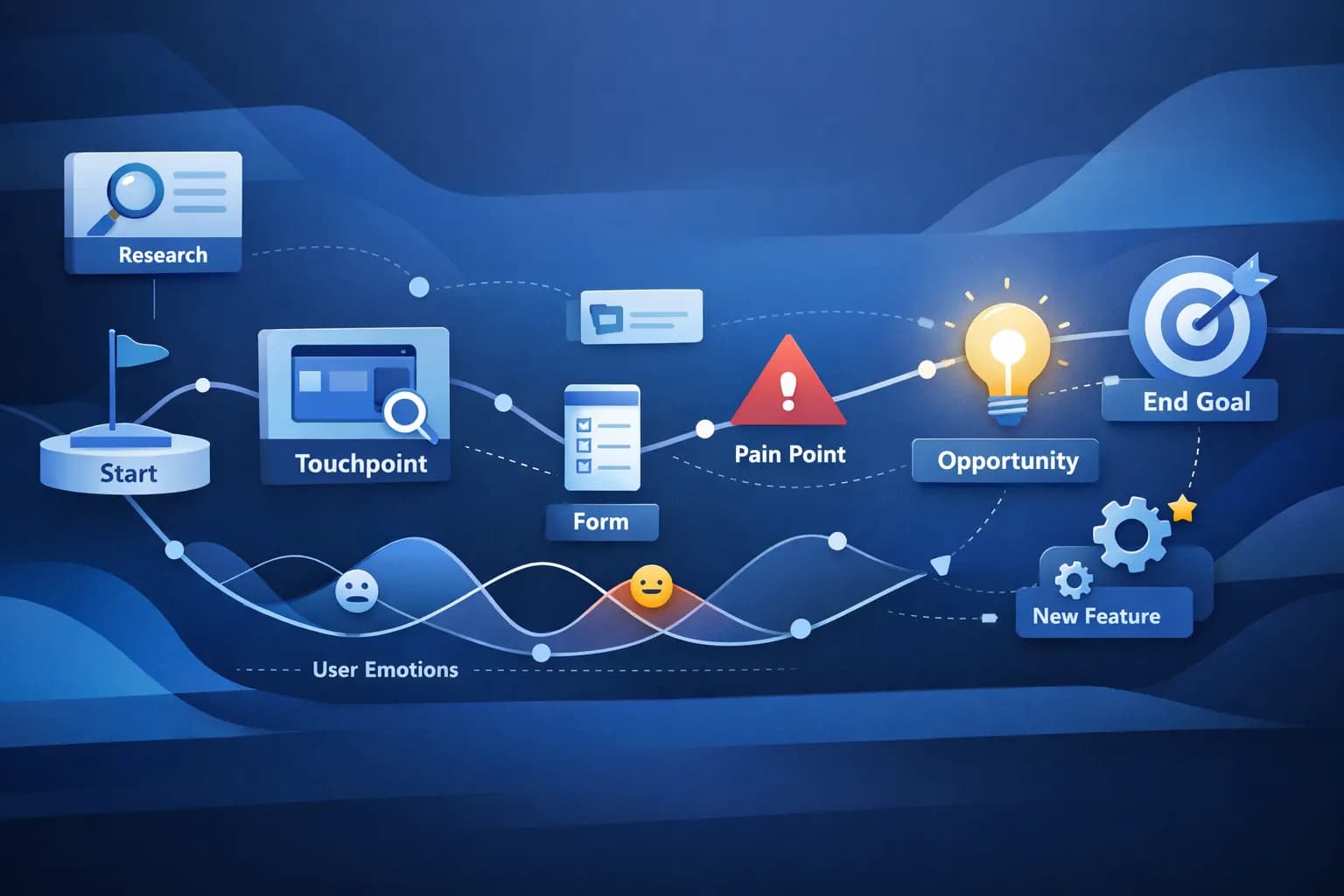
In today’s competitive digital landscape, understanding users is no longer optional. User Journey Mapping plays a critical role in opportunity discovery, helping businesses uncover insights that lead to better products, improved user experience, and sustainable growth.
This article explores how user journey mapping becomes a strategic foundation for discovering new opportunities, optimizing digital experiences, and creating user-centered solutions—an approach consistently applied by PT Code Hero Indonesia in global UI/UX projects.
What Is User Journey Mapping?
User Journey Mapping is the process of visualizing the complete experience a user goes through when interacting with a product, service, or brand.
It captures user actions, thoughts, emotions, and pain points across every stage, from initial awareness to long-term engagement.
Key Elements of a User Journey Map
- User personas
- User goals and expectations
- Touchpoints and channels
- Pain points and friction
- Emotional states
- Opportunity areas
Understanding Opportunity Discovery
Opportunity discovery is the structured process of identifying unmet user needs and translating them into meaningful product or business opportunities.
In UX strategy, opportunity discovery focuses on:
- Unresolved user problems
- Behavioral gaps in existing solutions
- Moments of frustration or confusion
- Potential areas for innovation
How User Journey Mapping Drives Opportunity Discovery
User journey maps provide a holistic view of the user experience, making it easier to spot patterns, bottlenecks, and moments of friction.
Every pain point highlighted in a journey map represents a potential opportunity to improve usability, increase conversion, or differentiate the product.
Step-by-Step User Journey Mapping Process
1. Conduct User Research
Effective journey mapping starts with qualitative and quantitative research, including interviews, surveys, usability testing, and analytics review.
2. Define User Personas
Personas ensure the journey map represents real users rather than internal assumptions.
3. Map Touchpoints and Emotions
Tracking emotional highs and lows helps teams prioritize opportunities with the greatest impact.
4. Identify Opportunities
Opportunities emerge when teams analyze friction points, unmet needs, and behavioral insights within the journey.
Real-World Opportunity Examples
- Complex onboarding → opportunity for simplification
- Low checkout completion → opportunity for UX optimization
- Lack of trust signals → opportunity for credibility design
- Feature overload → opportunity for prioritization
Why User Journey Mapping Matters for Global Digital Products
As digital products scale globally, understanding cultural context, behavior patterns, and user expectations becomes critical.
Code Hero Indonesia integrates user journey mapping into its professional UI/UX design process to help organizations build scalable, user-centered digital experiences.
Ready to Discover New UX Opportunities?
Learn how our UI/UX experts can help uncover growth opportunities through user journey mapping and data-driven design.
Explore Our UI/UX Design Service